Showing posts with label animal behavior. Show all posts

Monday, December 28, 2015

A Friend for Lakota

 A Friend for Lakota: The incredible true story of a wolf who braved bullying
by Jim & Jamie Dutcher
48 pages; ages 4-8
National Geographic Children's Books, 2015

"Spring blooms over the Sawtooth Mountains of Idaho. Wildflowers splash patches of bright colors across the meadows. And a young wolf pup, Lakota, rolls in the fresh green grass."

Lakota spends his days roaming the forest and meadows with his brother, Kamots. But where Kamots is fearless, Lakota is timid. A year later new wolves join the brothers, and they form a pack. As with all wolf packs, every member has a place. Some are leaders, some trouble-makers. Lakota's job is to help everyone play. But his low position in the pack makes him a target for aggression (bullying).

Fortunately, Lakota has a friend who won't let the others tease and bully. And that makes all the difference in how Lakota develops into the compassionate adult he is today.

Back matter includes a map and facts about gray wolves. The authors also write about their life living with the wolves, and include lots of resources for curious kids who want to learn more about wolves.

 Today we're joining the roundup over at the Nonfiction Monday blog where you'll find even more book reviews. Review copy provided by the publisher.

Friday, December 18, 2015

Animal Groups

Animal Groups
by Jill Esbaum; photos by Frans Lanting
32 pages; ages 5-8
National Geographic Children's Books

If you're hanging out at the Arctic you might notice a colony of Atlantic Puffins, or perhaps a celebration of polar bears. If you're in Africa you might come across a cackle of hyenas or scare up a zeal of zebras.

No matter where you are, if you come across a group of animals there's likely a collective noun to describe them. Jill Esbaum describes ten animal groups, sharing secrets of their family life. Each page features gorgeous photos plus extra facts in "Did You Know" boxes. Did you know that zebras help to keep their friends looking sharp?

Back matter includes additional animal facts, a list of names of other animal groups, and a map showing where the photos were taken.


This year sure has been the year for books on collective nouns for animals. Check out these other books, here and here.

If YOU were in charge of making up names for groups of things, what would you call a group of puppies? A group of kittens? A group of flies? A group of kids at school? A group of books about animal groups?

Today's review is part of the STEM Friday roundup. Drop by STEM Friday blog for more science books and resources. Review copy from publisher.

Monday, October 19, 2015

A Tower Of Giraffes


A Tower of Giraffes: Animals in Groups
by Anna Wright
32 pages; ages 3-7
Charlesbridge, 2015

What do you call a bunch of geese hanging out at the park next to the river? A gaggle, says Anna Wright. Animals can live in large social groups or small families, but no matter how many are in a group, each species lives in a unique social order.

She writes about their social lives in this book of collective nouns. Squirrels hang out in "scurries", and when danger threatens, they whistle out a warning to their buddies. They scurry away, and you realize that's how they got their name.

Wright collects a bunch of the best collective nouns (question: what do you call a bunch of collective nouns, anyway?). For example: a flamboyance of flamingos, a romp of otters, a parcel of penguins. I've learned that I have a mischief of mice in my basement, and the correct name for my friend's collection of hedgehogs is prickle.


The names are fun, and the tidbits about their social lives are cool - but what really drew me to this book are the illustrations. They are mixed media with fabric, feathers, wallpaper.... they are fun, fun, fun! Especially the sheep, who look like they are made from bits of sweater, and the peacocks with real peacock feathers.

So, what do you call a book that combines great science and imaginative art? STEAM. So go ahead. Pull out some field guides and your basket of scraps, and have fun creating your own artsy animals. And if you're looking for more collective nouns for animal groups, check out this post on Archimedes Notebook.

Today we're joining the roundup over at the Nonfiction Monday blog where you'll find even more book reviews. Review copy provided by the publisher.


Monday, October 12, 2015

The Wolf~Birds

The Wolf~Birds
by Willow Dawson
40 pages; ages 5-8
Owlkids Books, 2015

Deep in the wild winter wood, two hungry ravens huddle together, waiting for their next meal. Running through the snow below, a pack of wolves chases their next meal.

This is a story of survival in the winter woods. Hunting is hard work, and the hunters come up empty-handed, and even lose a member of the pack in the process. But when the ravens and the wolves team up, they both feast.

The book is based on scientific data and anecdotal reports from Aboriginal hunters, and explores an ecological relationship that could be thousands of years old. After all, ravens are called "wolf birds" for a reason. Lyrical, spare text is paired with acrylic paintings to tell the story. What I like is that there is enough room within this tale for readers (and listeners) to ask their own questions: what happens to a predator injured during the hunt? What happens if they return home with no food? Why do some animals help others of a different species?

Today we're joining the roundup over at the Nonfiction Monday blog where you'll find even more book reviews. Review copy provided by the publisher.

Friday, July 10, 2015

Eggs!

Egg: Nature's Perfect Package
by Steve Jenkins and Robin Page
32 pages; ages 4-8
Houghton Mifflin Harcourt, 2015

If you're wondering what came first - it's the egg! And if you're wondering what drew me to this book, it's the simplicity of the cover. An almost perfect egg with just a bit of beak showing... I want to know what emerges.

This book is filled with wonderful illustrations of eggs of all kinds, from banana slug eggs to frog eggs to lizard eggs... with a couple of strange mammals tucked in their shells as well. Steve Jenkins and Robin Page have done a marvelous job showing the diversity of egg-layers and the eggs they lay.

I love the spread where they compare the actual size of eggs, from a period-sized stink-bug egg to an elephant bird egg too large to fit on the page. They show where each animal lays its eggs, and how many eggs it usually lays.

Eggs are tasty and nutritious, so the birds and bugs and frogs and snails must protect their eggs - and incubate them until they hatch. Once incubated, there's the problem of getting out of the egg: beak? feet?

If you want to get the inside scoop about what life is like inside an egg, there are a couple timelines showing development of a chicken and an alligator. There is also a lot of back matter where you can learn more about the egg-layers featured in the book.

Today's review is part of the STEM Friday roundup. Drop by STEM Friday blog for more science books and resources. Perfect picture book Friday is on summer break, but you can still drop by Susanna Leonard Hill's site to read previous posts. She keeps an ever-growing list of Perfect Picture Books.  Review copy from the publisher.

Monday, July 6, 2015

Noisy Bird Sing-Along

Noisy Bird Sing-Along
by John Himmelman
32 pages; ages 3-8
Dawn publications, 2015

I love leaving the windows open all night. We listen to the chorus of frogs, and the gentle whoo-whoo-whooing of the owls. There's only one problem...

The morning birds are SO NOISY! Like the birds in this book. Look at that cover - you know that this book is going to be a lot of fun to read. And sure enough, John Himmelman takes us on a wild auditory field trip. We meet Robin who wakes us up with his "Cheery up? Cheery-oh!" call. And the Barred owl - he's the one constantly asking "who cooks for you?" And for hockey fans who are already missing the end of the Stanley Cup playoffs, there are the White-throated sparrows that sing, "Oh sweet Canada, Canada, Canada".

Not only does Himmelman share the birds' songs, he also provides tidbits about where each bird takes its meals. Chickadees hunt for bugs in trees, while hummingbirds zip from flower to flower poking their lo-o-ong beaks into blossoms and slurping up the nectar. After we are introduced to all of the birds, Himmelman brings them together in one noisy chorus.

I love that he includes back matter: a page of fun facts about each of the birds, as well as handy advice about birding, feeding, and pishing. Sounds like "fishing" but instead of casting with a rod, you make pssh-pssh-pssh noises to call out curious birds. Click here to listen to all of the bird songs.


Today we're joining the roundup over at the Nonfiction Monday blog where you'll find even more book reviews. Review copy provided by the publisher.

Friday, April 10, 2015

Animal Heroes

Today I'm sharing two books about animal heroes. The first is true stories.

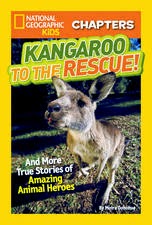
 Kangaroo to the Rescue
by Moira Rose Donohue
112 pages; ages 7-10 years
National Geographic, 2015

This book features stories about one kangaroo, two dogs, and three pigs. Lulu the kangaroo was a rescue animal. There are great descriptions of how her adoptive family raised her from a cat-sized joey to an adult. They made Lulu a pouch, figured out how to feed her, and helped her regain strength. Later, they encouraged her to go free, but she stayed close to the family. Good thing, too - because she ends up saving someone's life.

Maggie and Pilot were two labs: one black, one blonde. They played chase, fetched balls, and served as mentors for young pups in training to be guide dogs. Later, when Maggie went blind, Pilot acted as her guide, sticking close and nudging her out of trouble. 

The last section tells stories of three not-so-little pigs who were brave and strong and helped people out of predicaments. One even received a gold medal from the ASPCA for saving her human companion's life.

Salted in with the tales of animal bravery are sidebars and fact-boxes about the animals themselves. We learn about marsupials and why tails are important to kangaroos. There's information about guide dogs and therapy dogs, and pig social life. Did you know pigs can make over 20 different oinks, grunts, and squeals? And that pig mamas sing to their piglets?  Review copy provided by publisher.

If you're looking for a fun companion book that's fiction, try this one:

Sparky and Tidbit
by Kathryn O. Galbraith; illus by Gerald Kelley
40 pages; ages 6-8
Simon Spotlight, 2015

On Sparky's birthday he got just what he always wanted: a K-9 cap, a K-9 collar, and a shiny K-9 badge. Now he can be a hero. But what would a "real" hero do? His first attempts fall through, and then he hears cries of a puppy in distress.

Is it mean cats? A stolen bone? Cranky skunks? No, sighs the pup named Tidbit. It's a book. He can't read it. What's a hero to do? Sparky helps Tidbit through a few pages of the book - just this once, he says. But the young pup is in need, and Sparky has a big heart, and before he knows it he is a "reading" dog.

This is a "Ready to Read" book with language simple enough for early readers, and a fun story that will keep them turning to the next chapter. It's a great choice for reluctant readers who love dogs. It's also a great story for therapy dogs to share with their reading buddies. Review copy provided by Blue Slip Media.

Today's review is part of the STEM Friday roundup. Drop by STEM Friday blog for more science books and resources.


Friday, April 18, 2014

Beneath the Sun - blog tour!


Beneath the Sun
by Melissa Stewart; illustrated by Constance R. Bergum
32 pages; ages 4-8
Peachtree Publishers, 2014

When it gets hot outside, what do you do? Go inside? Sit in the shade? Turn on a fan? Drink cold lemonade? We have lots of different ways of beating the heat – but what do animals do?

In Beneath the Sun, author Melissa Stewart takes readers into four different habitats for a look at how different animals cool off on hot days. We learn about earthworm loops and horned toad hangouts, cool rocky dens and tide pools. The text is full of vivid verbs, and Constance Bergum’s illustrations beg for closer inspection.

Melissa has written tons of books for kids – more than 150 – and she’s busy on her next project. But she had time to answer Three Questions about Beneath the Sun.

Sally: What inspired this book? Being outside in July?

Melissa: I have my editor, Vicky Holifield at Peachtree Publishers, to thank for the idea behind this book. When it was clear that my previous book Under the Snow was very popular, Vicky suggested that we present “the other side of the story.” She was right. Surviving in summer isn’t easy for some animals, so they’ve come up with all kinds of amazing adaptations for enduring hot, dry weather.

Sally: I like the way you move from animals that could be in your neighborhood to more distant locations, like the desert. How did you decide what habitats – and animals – to focus on?

Melissa: Because Beneath the Sun is meant to be a companion to Under the Snow and When Rain Falls, I initially intended to focus on the same habitats as those books. In When Rain Falls, which came first, the four habitats I wrote about were a field, a forest, a desert, and a wetland. Since it doesn’t snow in deserts, for Under the Snow, I focused on animals living in fields, forests, ponds, and wetlands.

For Beneath the Sun, I could include the desert, but not forests. Because forests are dark and shady, the animals there don’t have too much trouble surviving in summer. That meant I had to search for a new habitat. Seashores were the perfect choice because they really heat up under the sizzling sun.

For all three books, I tried to include a wide variety of animals—some familiar and some that might be new to young children. I searched high and low for interesting adaptations, such as vultures that keep cool by spraying their legs with urine. I knew children would find that fascinating.

Sally: Do you have any learning activities that teachers and parents can use with Beneath the Sun ?

Melissa: I created a video mini-lesson that explains how I changed the text, adding vivid verbs to the manuscript during the revision process. It also offers tips to help students strengthen the verbs in their own writing. (Sally: and there’s a cool worksheet you can download). I also have a
Teacher’s Guide, Readers Theater script, and some activity sheets that go with the book.

Thanks Melissa! Today is the last day of the blog tour. If you missed any stops, here’s the tour schedule for earlier in the week:

Monday, April 14- Jean Little Library and Blue Owl
Tuesday, April 15  – Geo Librarian
Wednesday, April 16 - Kid Lit Reviews
Thursday, April 17- Tolivers to Texas and Chat with Vera 

Remember to drop by STEM Friday to see what other science books and resources bloggers are sharing.Review copy provided by publisher.

Friday, January 17, 2014

Strange & Wonderful Scorpions!

Scorpions! Strange and Wonderful
by Laurence Pringle; illus by Meryl Henderson
32 pages; ages 8-10
Boyds Mills Press, 2013

"It is twilight in the desert," writes Pringle. A lizard scurries to the safety of the rocks when, "Suddenly it is grabbed by a scorpion's powerful claws. The lizard struggles. It tries to break free..."

But we know what is going to happen. That lizard is toast... or at least dinner. There are almost two thousand different species of scorpions, and they live in a diversity of habitats: tropical forests, seashores, deserts, high mountains, and even in deep dark caves. Four hundred million years ago scorpions measured three feet long... modern scorpions are not quite so large.

By the time you get to the end of the book you know how many legs and eyes scorpions have, how their mouths are designed for ripping apart prey, and how desert scorpions can move across hot sand. Pringle shares a list of things they eat (anything that moves, including other scorpions) and gives us a glimpse of family life. Scorpions have courtship dances, exchange scorpion kisses, and give birth to live babies. Yes, baby scorpions don't hatch from eggs like other arachnids. they even ride around on their mom's back for a short time while their cuticle hardens. But then it's time to scatter and hunt on their own.

"Real scorpions," writes Pringle, "...are fascinating creatures, vital in their natural habitats, and full of secrets yet to be discovered."

Today is STEM Friday - head over to the STEM Friday blog to see what other people are talking about in science. Don't step on any scorpions on your way! Review copy provided by publisher.

Friday, October 18, 2013

Penguins!


About Penguins (revised)
by Cathryn Sill; illus by John Sill
48 pages, ages 3-7
Peachtree Publishers, 2013

Whenever I go to a zoo, I always look for the penguin house. Who can resist watching the antics of these tuxedo-clad seabirds? They may not fly, but they move with such grace and precision beneath the water.

About Penguins is a new, revised version with updated material and an overview of seventeen species of these amazing birds. Each double-page spread features simple text and an illustration featuring one of the species. Cathryn gives us the science while John manages to capture great expressions on the birds' faces. Take the Royal Penguin (South Pacific) - in addition to the crown of yellow feathers, he manages to catch their most regal expression.

Readers learn the basic facts: penguins have special waterproof feathers; they can change direction quickly to avoid predators (at least while swimming underwater); and some eat squid. They don't all nest on ice - some build their nests in forests, in caves, or in burrows. And they don't all live in cold places - the Galapagos penguin lives in the tropics!

As with other books in the series, there is excellent material at the back: six pages of detailed notes that expand on each illustrated spread, plus a glossary and suggested books and websites.

Today's review is part of the STEM Friday round-up. Check out the other science books and resources reviewed this week. Review copy provided by the publisher.

Friday, July 26, 2013

Too Hot? Too Cold?


Too Hot? Too Cold? Keeping Body Temperature Just Right
by Caroline Arnold; illus by Annie Patterson
32 pages; ages 6-9
Charlesbridge 2013

It's summer here in the northern hemisphere, and that means hot, hot, HOT days. But south of the equator it's winter, and that means cold, cold, COLD days. So while we're peeling off layers to keep cool, kids on the other half of the earth are pulling on parkas and mittens to keep warm. That's how we humans adjust our temperature.

But what do animals do when they need to cool down or warm up? That's what Caroline Arnold explores through the pages of this book. She talks about "warm-blooded" animals and "cold-blooded" animals and shivers and sweat. She talks about fur and feathers and blubber and goosebumps and finding a cool breeze on a hot day.

This post is part of STEM Friday round-up. And on Monday, we're celebrating Nonfiction Monday right here! Just post a title and link for the book you're reviewing in comments below.  Review copy provided by publisher.

Welcome to Nonfiction Monday! See what other people are reading & add your links for reviews in the comments - I'll add books and links throughout the day.


Jeff has a review of Alphabet Trucks over at NC Teacher Stuff.


Christy has a great review of T is for Territories over at Christy's Houseful of Chaos


Jennifer has a dead-on review of Deadly! over at Jean Little Library.


Check out the great review of Bone by Bone at Bibliolinks.


Oops! Power was out for a few hours - but it's back now so I can add some more titles in today's review round-up. I'll check back before dinner to pick up any stragglers.

Roberta's got a review of No Monkeys, No Chocolate over at Wrapped in Foil. This is one book I absolutely must read (as I am overly fond of chocolate).


This is a new title in the Scientist in the Field series - an awesome collection of well-written books for curious kids. Eruption! is reviewed over at proseandkahn.


Alex posted a review of Brick by Brick over at Randomly Reading.


Janet reviews Bubbles Float, Bubbles Pop over at All About the Books.


Looking for some hard, cold cash? Check out Anastasia's review of Follow Your Money at Booktalking.

Friday, July 12, 2013

Take Flight with Bats

Bats: Biggest! Littlest!
by Sandra Markle
32 pages; ages 5 - 7
Boyds Mills Press 2013

This is the newest addition to Sandra Markle's "Biggest! Littlest! series. In this book Sandra explores the diversity of bats - from the Bumblebee bat that weighs as much as a penny to the Gray-headed Flying Fox with a 3-foot wingspan.

Being big is great if you want to carry food any distance, but there's some advantages to being small, too. For one thing, you can eat food other animals find "too little to bother with".

Markle mentions vampire bats, fruit bats, bats with huge eyes and bats with huge ears. She shows fishing bats and nectar-sipping bats - enough bats to drive even the most science-loving kid just a little bit... batty.

This post is part of STEM Friday round-up, where you can find all sorts of science resources. Review copy provided by publisher.

Sally's Bookshelf is going to relax a bit this summer with Summer Reading! So for the rest of July and August, you'll find something fun to read here on Fridays. Check out cool summer reading programs at your local library - and don't forget to drop by on Fridays to see what Sally's reading.

Friday, April 26, 2013

On the Move - Animal Migrations


On the Move: Mass   Migrations
by Scotti Cohn; illustrated by Susan Detwiler
32 pages; ages 4-8
Sylvan Dell, 2013

Spring is migration time. In our area thousands of salamanders move from their winter homes in the woods to the ponds and pools where they'll mate and lay eggs. The air is filled with vees of geese honking their way north, while on the coast thousands of horseshoe crabs scuttle out of the bay and onto sandy beaches.

Scotti Cohn shares migration secrets from across the animal kingdom, through different habitats and over a year of seasons. Chimney swifts and monarch butterflies are more visible during fall migrations; come winter, elephant seals are on the move. There's information galore for earthkeepers and animal lovers who want to know more about the creatures who share our planet.

This post is part of STEM Friday round-up. Review copy provided by publisher.

Friday, January 18, 2013

How Do you Take a Bath in the Desert?


Desert Baths
By Darcy Pattison; illus. by Kathleen Rietz
32 pages, ages 4 – 8
Sylvan Dell Publishing, 2012

Deserts are dry places – so how do the animals living there clean themselves off? After all, everyone needs a bath now and then.

Darcy Pattison shows how twelve different animals get rid of dirt, dust, grime and parasites – and takes us on a tour of the desert habitat through a typical day. She opens with a turkey vulture awaiting dawn so it can begin the day with a sunbath. Tiny hummingbirds preen with dewdrops, while roadrunners shake off after a dust bath. Some moms use their tongues to groom their young, while others make do with a spit bath. All accompanied by Kathleen Rietz’s gorgeous paintings.

Pattison includes six pages of activities and desert details in the “creative minds” section at the back. There are fun facts – did you know that parts of the Atacama Desert in South America haven’t had any rain in 100 years? There’s a matching game, learning to tell time by the sun, and some “food for thought” questions. Taken altogether, it’s no mystery that this book was listed by the National Science Teacher Association as one of 2013’s “Outstanding Science Trade Books”.

The other week I caught up with Darcy long enough to ask her Three Questions about her book.

What inspired you to write about how animals take baths on the desert?

Darcy: When I learned about “Anting” – it’s such a bizarre way of cleaning feathers. Scientists say that the formic acid from the crushed ants will help control parasites. Also, several years ago while camping in the Boston Mountains of Arkansas, I headed out on an early morning walk. It was chilly and a group of vultures sat in the tiptop of trees, spreading their wings to warm up.
What sort of research did you do for this book?
Darcy: I wanted to balance the types of animals – those active in the daytime as well as those active at night. I really wanted to add a spider, but they just don't have skin that needs to be cleaned. The tarantula, a great desert species, molts – it sheds off its old exoskeleton for a new one as it grows. But that didn't seem quite right for a book on baths. With the hummingbird, I’d read a study mentioning how they take dew baths, and then verified that with a couple of scientists.

How exactly does an animal get clean with a mud or dust-bath? And have you tried one?
Darcy: We think of baths as something that keeps us dirt-free. But at one time, humans were plagues with fleas, lice (in the hair) and other parasites, the likes of which still plague wild animals. Dirt baths can take care of those parasites.
Darcy hasn’t taken a dust bath or wallowed in the mud, but she says she’ll try it… some day. Drop by Darcy’s website to learn more about desert baths and see a video that children helped make about their take on the book. And head over to STEM Friday to check out more great science/tech/math resources.  Review copy provided by publisher.

Monday, December 24, 2012

Puffling Patrol


Puffling Patrol
by Ted and Betsy Lewin
56 pages, pages 6 – 10
Lee & Low 2012

Every spring, hundreds of thousands of puffins make their way to the Westman Islands, off the south coast of Iceland. They build nests on the rocky cliffs, and spend the summer caring for their newly hatched chicks. By August, the young puffins – called pufflings – are ready to leave home and head out to the open sea. They fly off the cliffs at night and some, confused by the lights of town, flutter down onto the streets. Their wings are not strong enough to lift them off the streets, so children in the town give them a helping hand. Young members of the Puffling Patrol collect the confused birds and carry them to the shore to release.

Ted and Betsy Lewin tell the story of two of the children in the Puffling Patrol, Dani and Erna. The eight-year old twins take their job seriously, collecting boxes and gathering flashlights. When it’s dark, at 10 pm, they head out  into the rainy night.

The next day the children take their pufflings to the museum to be measured and weighed. Only those strong enough to make it on their own are released. Finally Dani and Erna take their pufflings to the ocean.

“The sea will be the puffins’ home for the next two years,” write the Lewins. “If all goes well, they will return to Heimaey as adults and raise their own chicks.” And when they do, the Puffling Patrol will be ready. 

 Check out other books that celebrate nonfiction at Nonfiction Monday, hosted this week by Jean Little Library.